

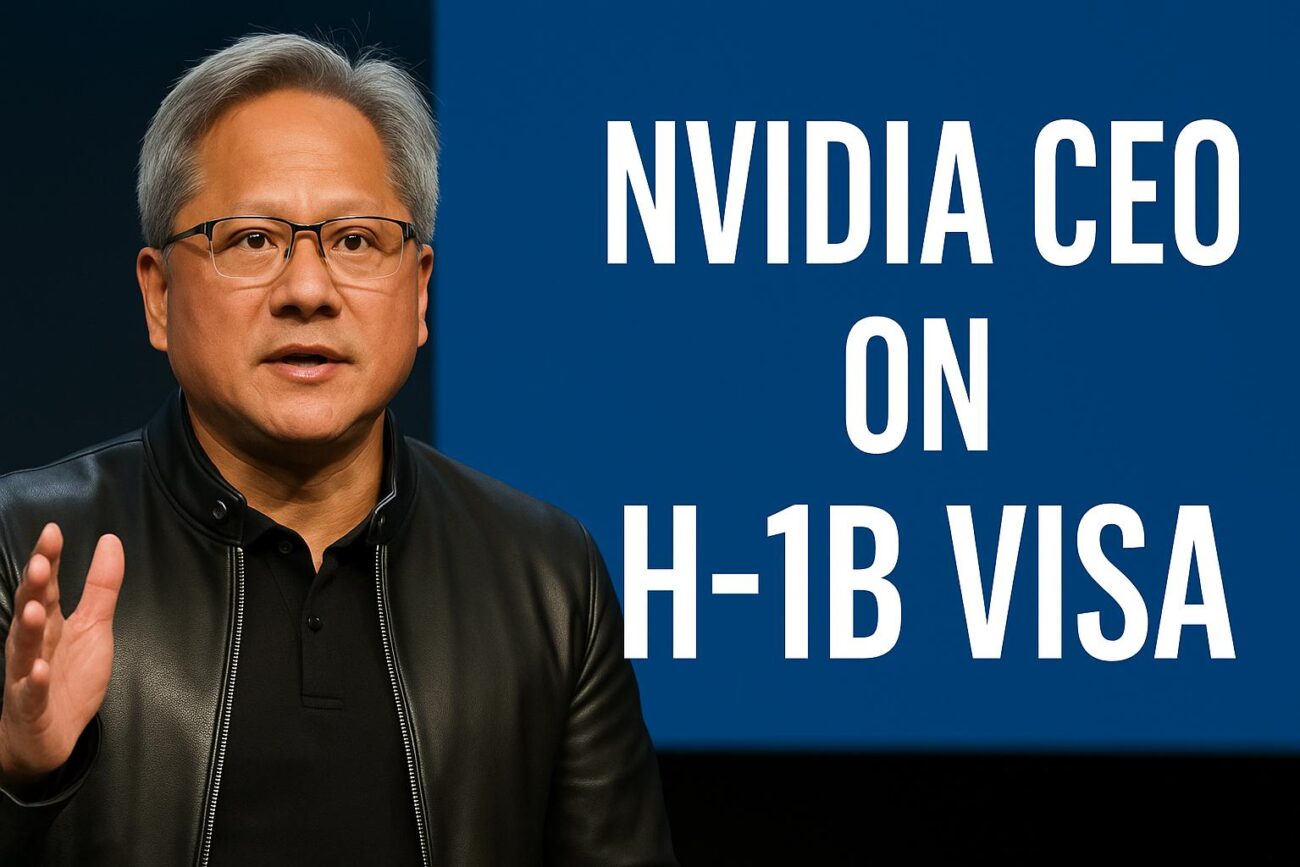
The AI Revolution Meets an Immigration Crossroad
The intersection of AI innovation and immigration policy is heating up — and no one embodies that story better than Jensen Huang, CEO of Nvidia, the world’s most valuable semiconductor company.
With the recent U.S. government decision to impose a $100,000 fee on new H-1B visa applications, the tech world erupted in debate. Would this deter foreign talent — or finally fix a system long accused of abuse?
While many tech executives stayed silent, Huang spoke out with a balanced, thoughtful perspective that reflects both his immigrant background and his leadership at the heart of the global AI race.
🧠 Nvidia’s Stand: “We’ll Keep Sponsoring — No Matter What It Costs”
In an internal memo later confirmed by Reuters and Business Insider, Huang assured employees that Nvidia will continue to sponsor H-1B visas, despite the new six-figure cost per application.
“We will not stop hiring the best talent from around the world,” Huang said. “Nvidia will cover the entire cost of the new visa fees.”
That means Nvidia — already competing for top AI researchers, data scientists, and chip engineers — will absorb millions in additional expenses to keep its doors open to global innovators.
It’s a strong message: Nvidia believes talent, not geography, drives innovation.
💬 Huang’s Personal Connection: “My Family Might Have Been Left Out”
Jensen Huang’s position is not just corporate — it’s deeply personal.
Born in Taiwan and raised in Thailand before immigrating to the United States as a child, Huang credits America’s openness to immigrants for enabling his success story.
“If this policy existed when my family immigrated, we might never have made it here,” he reportedly told The Times of India. “But I still believe reform is necessary — it just has to be balanced.”
That nuanced stance — supportive of reform, but wary of overreach — reflects the delicate reality facing the U.S. tech ecosystem today.
⚖️ What He Means by “A Great Start, But Too Expensive”
In comments to Business Insider, Huang called the reform “a great start,” applauding the intent to make the H-1B system more merit-driven and less prone to misuse by outsourcing firms.
But he didn’t mince words about the $100,000 application fee:
“It’s too high,” he said. “Startups and small innovators won’t be able to afford it — and that’s where great ideas often come from.”
Huang’s warning highlights a growing divide: Big Tech giants like Nvidia, Google, and Microsoft can absorb the costs, but smaller AI startups — the very ones driving new breakthroughs — may be priced out of the talent market entirely.
🌍 Why This Matters to the Global AI Race
The new H-1B rules come at a time when AI compute demand is exploding, and countries like India, Canada, and the UAE are positioning themselves as alternative hubs for skilled talent.
For companies like Nvidia — which sits at the core of the AI infrastructure boom — keeping the U.S. open to global engineers is not just a social issue; it’s a strategic necessity.
“America’s leadership in AI depends on our ability to attract and retain the best minds,” Huang said. “We can’t build the future by closing the door.”
💸 The Broader Tech Industry Impact
- Big Tech will likely follow Nvidia’s lead, covering the cost to retain top-tier global engineers.
- Startups and smaller firms may struggle to compete for foreign talent, deepening inequality in access to innovation.
- Universities could see reduced international enrollment in STEM programs if pathways to employment narrow.
- India, the largest source of H-1B visa holders, may see more professionals opting to stay home — potentially boosting its domestic tech sector.
🧭 The Bottom Line: Huang’s Message is Clear
Jensen Huang’s comments go beyond Nvidia — they speak to the soul of America’s tech leadership.
Yes, reforming immigration is necessary. But if the U.S. raises walls too high, it risks shutting out the very innovators who built its modern economy.
In an era defined by AI, semiconductors, and global collaboration, Huang’s voice reminds policymakers of a simple truth:
Innovation knows no borders — and neither should opportunity.
